Movement Solutions for Golfers
Golf Performance Therapy in Boise for mobility limitations and pain affecting swing mechanics
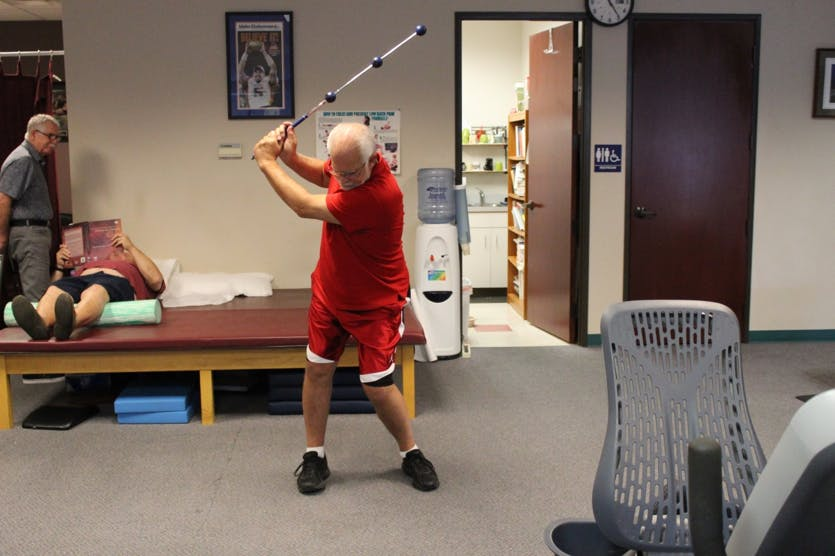
Golf places unique demands on the body that differ significantly from other sports—rotational power generated through a stable base, coordinated sequencing from legs through torso to arms, and repetitive asymmetric loading that creates specific injury patterns. When back stiffness limits your rotation, shoulder pain interrupts your backswing, or hip restrictions prevent proper weight transfer, your swing compensates in ways that reduce power and increase injury risk. Advance Physical Therapy conducts movement assessments designed specifically for golf mechanics, identifying which physical limitations alter your swing pattern and which compensations you've developed to work around those restrictions.
Treatment addresses the flexibility, strength, and movement control needed for efficient golf mechanics. Thoracic spine mobility allows rotation without excessive stress on the lower back. Hip internal rotation and shoulder range of motion enable proper positions throughout the swing. Core stability provides the foundation for transferring power from lower body to upper body. Your program targets the specific physical restrictions affecting your individual swing.
Arrange a golf-specific movement evaluation to identify physical factors limiting your performance or causing pain during play.
What Golf Performance Assessment Reveals
Evaluation includes mobility testing for joints critical to golf mechanics and strength assessment in ranges that stabilize your swing. Therapists measure thoracic rotation, hip internal rotation, shoulder flexion and rotation, and ankle mobility—limitations in these areas force compensations that alter swing plane and reduce clubhead speed. Testing also reveals strength deficits in single-leg stability, rotational power, and the ability to maintain posture under load. Results show exactly which physical factors contribute to swing faults or injury risk.
After completing your program, you notice specific changes in how your body moves during your swing and how you feel after playing rounds. Rotation through your backswing and follow-through becomes smoother without the catching sensation or tightness that previously limited your turn. Lower back discomfort that appeared after several holes or the day following rounds decreases as your spine moves with better mechanics and core stability reduces compensatory stress. Your ability to maintain posture throughout the swing improves as hip and thoracic mobility increase, allowing more consistent ball striking without the early extension or loss of angles that previously affected contact.
Programs for golfers include injury prevention focused on the most common golf-related problems—lower back pain from rotation stress, shoulder impingement from repetitive overhead positioning, and elbow tendinitis from impact forces. Exercises build resilience in movement patterns that golf requires and address the asymmetric loading that develops from repeatedly swinging in one direction.
Golfers often wonder how physical therapy applies to their game and what improvements they can expect. These answers clarify what golf performance work involves.
What physical limitations most commonly affect golf performance?
Thoracic spine stiffness restricts rotation and forces excessive lower back movement during the swing. Limited hip internal rotation prevents proper weight shift and creates compensations that reduce power transfer. Shoulder mobility restrictions alter arm position at the top of the backswing. Each limitation changes swing mechanics in measurable ways that affect both performance and injury risk.
How does treatment address golf-specific injuries like lower back pain?
Golf-related back pain typically stems from repetitive rotation combined with side bending during the swing—a movement pattern that loads the spine asymmetrically. Treatment improves thoracic mobility so rotation occurs higher in the spine rather than concentrating stress in the lower back. Core stabilization exercises teach your body to control rotation from a stable base. Hip mobility work ensures proper sequencing so power initiates from the ground up rather than starting with the spine.
What changes in swing mechanics result from improved mobility?
When thoracic rotation increases, your shoulder turn deepens without swaying or sliding. Improved hip mobility allows better weight transfer to your back leg during the backswing and full rotation through to your front side on the follow-through. Better ankle mobility supports balance throughout the swing. These physical improvements allow mechanics changes your instructor recommends but your body couldn't previously achieve due to restrictions.
How do programs differ for golfers at different skill levels?
All golfers benefit from addressing physical limitations, but program emphasis varies by player. Recreational golfers often focus on injury prevention and mobility to maintain pain-free play. Competitive players prioritize power development and movement efficiency that translates to performance gains. Older golfers may emphasize maintaining flexibility and strength to preserve swing speed and distance as aging affects these qualities.
Why do Boise golfers often develop tightness after courses with elevation changes?
Walking hilly courses like those common in the Boise area adds significant lower body demand beyond the swing itself. Uphill and downhill lies require additional hip and ankle mobility to maintain balance and proper setup positions. Programs for local golfers include conditioning for varied terrain and exercises that address the additional physical demands of elevation changes during play.
Common Questions About Golf Therapy
Advance Physical Therapy tailors golf programs to your current skill level, physical limitations, and performance goals. Set up a movement screening to discover which physical factors are affecting your swing and what targeted improvements will make the most difference in your game.