
Regaining Function After Joint Replacement
Total Joint Rehabilitation in Boise for mobility and independence following hip, knee, or other joint replacement surgery
Total joint replacement fundamentally changes how the affected joint moves and requires systematic retraining of the muscles and movement patterns that control it. The new joint surfaces eliminate pain from bone-on-bone arthritis, but surrounding muscles have weakened from disuse and altered mechanics during years of progressive joint deterioration. Your nervous system also developed compensations—limping, limited weight-bearing, or avoiding certain movements—that must be retrained after surgery provides pain-free motion. Advance Physical Therapy designs rehabilitation specific to your joint replacement type and the functional goals that matter most for regaining independence in daily activities.
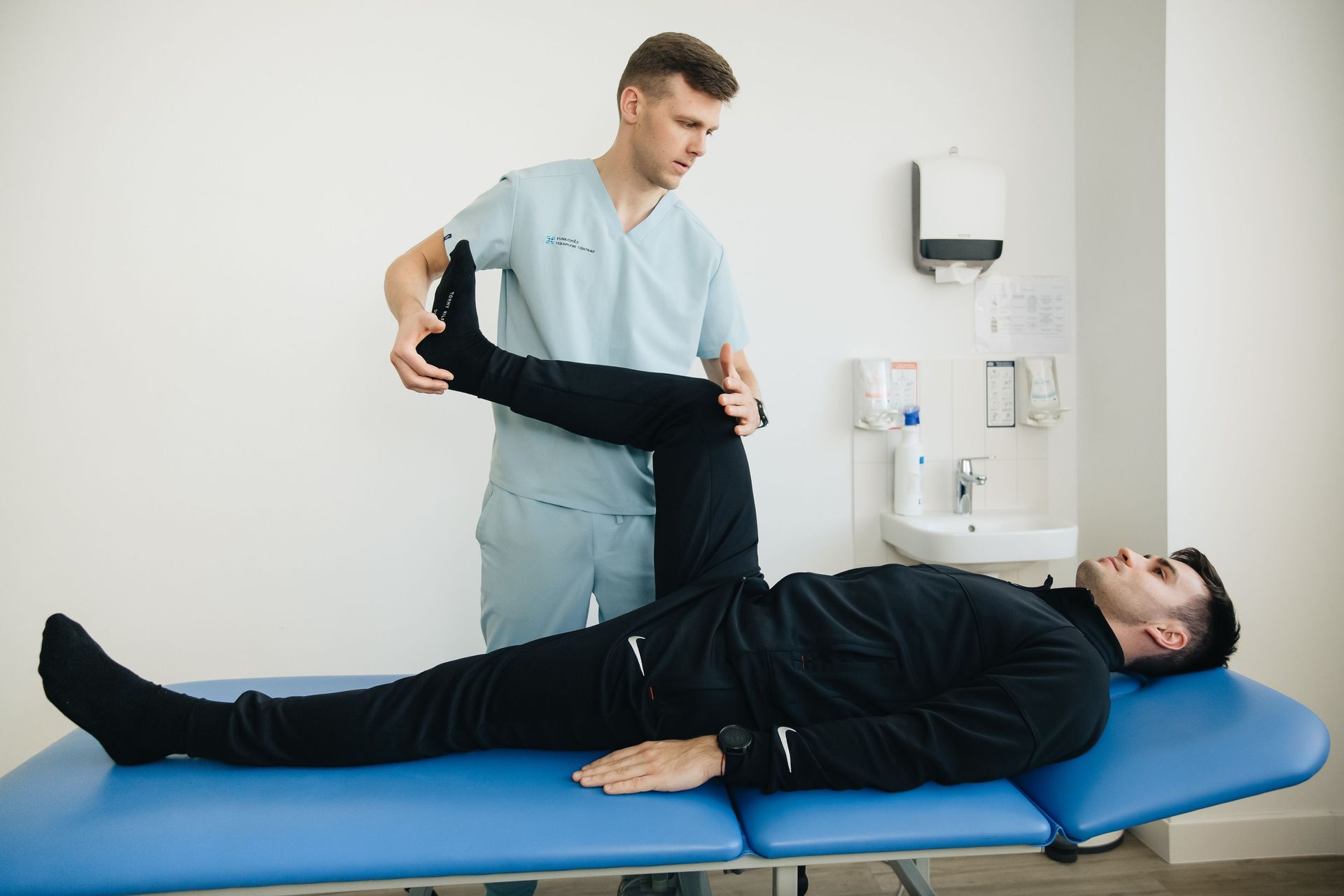
Therapy begins as recommended by your surgeon, typically soon after surgery to prevent stiffness while protecting the surgical site during early healing. Treatment addresses range of motion, strength, walking mechanics, balance, and the ability to perform daily tasks like navigating stairs, getting in and out of chairs, or managing household activities. Your program progresses through stages aligned with tissue healing and joint precautions specific to your surgical approach.
Arrange your post-operative therapy to begin rehabilitation as your surgeon recommends following joint replacement.
What Total Joint Rehabilitation Involves
Your rehabilitation follows stage-specific goals based on how healing progresses and what functional milestones you need to achieve. Early therapy reduces swelling through appropriate exercises and positioning, restores range of motion within protected limits, and begins gentle strengthening in muscles that stabilize the new joint. Walking retraining with assistive devices ensures proper mechanics while tissues heal. Balance training begins early since joint replacement temporarily affects proprioception—your body's sense of joint position—which impacts stability. Later stages progress to higher-level strengthening, advanced balance challenges, and functional training for activities you need to resume safely.
As rehabilitation progresses, you notice substantial improvements in what you can do independently. Walking distance increases as strength and endurance improve, and you transition from walker to cane to walking unassisted as stability returns. Stairs that initially required step-to step-to technique—bringing both feet to each step—become manageable using alternating steps as quad strength rebuilds. The limp that developed from years of painful arthritis gradually resolves as your body relearns symmetrical walking patterns with the pain-free joint. Daily activities that arthritis made difficult—putting on shoes, getting in and out of cars, standing from low seats—become easier as mobility and strength improve beyond what you could do before surgery.
Programs also include education about joint precautions specific to your replacement type, activity modifications during healing phases, and long-term considerations for protecting your new joint. Understanding what movements to avoid and why certain restrictions exist helps prevent dislocation or other complications while healing. You learn appropriate activity progression so you can safely return to desired activities as tissues and strength allow.
Patients undergoing joint replacement often have similar concerns about the rehabilitation process and what recovery involves. These answers address those common questions.
What determines when therapy should begin after joint replacement?
Timing depends on your specific procedure and surgeon preference, but most joint replacements benefit from therapy beginning within days of surgery once initial pain and swelling are managed. Early therapy prevents stiffness, maintains circulation that supports healing, and begins the strengthening needed for functional independence. Delaying therapy allows scar tissue to form in shortened positions and muscles to weaken further, making later rehabilitation more difficult.
How does rehabilitation differ between hip and knee replacements?
Hip replacement therapy emphasizes precautions that protect against dislocation based on surgical approach—avoiding extreme flexion, rotation, or adduction depending on which direction carries risk. Knee replacement focuses heavily on achieving full extension since post-surgical swelling and pain cause patients to hold knees slightly bent, leading to flexion contractures if not addressed. Walking mechanics after knee replacement require specific quad strengthening, while hip replacement demands gluteal strengthening for stability.
Why is balance training important after joint replacement?
The surgery temporarily disrupts proprioceptive feedback from the joint capsule and surrounding tissues, affecting your unconscious sense of where the joint is positioned. This sensory change impacts balance and increases fall risk during recovery. Balance exercises retrain your nervous system to integrate sensory input from the new joint and surrounding structures. Progressive balance challenges prepare you for real-world situations where balance is essential for safety.
What should walking look like as recovery progresses?
Initially, you walk with assistive devices using shorter steps and accepting some asymmetry as pain and swelling limit motion. As healing advances, therapy focuses on increasing step length, normalizing timing between legs, reducing reliance on devices, and correcting the limping pattern that often persisted for years before surgery. Achieving symmetric walking mechanics requires conscious attention and specific exercises that address remaining strength or mobility limitations affecting gait.
How do Boise's winter conditions affect recovery after joint replacement?
Patients recovering during winter months face challenges with outdoor walking on potentially icy surfaces when balance remains impaired. Rehabilitation includes indoor walking alternatives and specific training for navigating slippery or uneven surfaces safely before exposure to those conditions. Stair training becomes especially important since entering and exiting homes may involve steps that become hazardous in ice or snow while recovery is ongoing.
Answers to Joint Replacement Recovery Questions
Advance Physical Therapy tailors joint replacement rehabilitation to your specific procedure, current function level, and the activities you need to resume. Set up your initial post-operative evaluation to establish baseline measurements and begin the structured progression that rebuilds strength, mobility, and confidence in your new joint.