Restoring Movement After Musculoskeletal Injury
Orthopedic Physical Therapy in Boise for pain and limited movement affecting joints, muscles, tendons, and ligaments
Advance Physical Therapy addresses orthopedic conditions through personalized evaluation and treatment plans designed around your specific injury and movement limitations. The therapy begins with a detailed assessment that identifies exactly where dysfunction originates—whether stiffness appears in the joint capsule itself, compensation patterns developed in surrounding muscles, or mechanical restrictions affecting how tendons glide during movement. Your program includes hands-on manual techniques combined with therapeutic exercise that targets the specific tissues limiting your function.
Treatment plans progress through controlled stages based on tissue healing timelines and functional milestones rather than arbitrary session counts. Manual therapy addresses joint mobility restrictions and soft tissue tension, while exercises rebuild strength in ranges where you've lost control. The combination restores coordinated movement patterns that allow you to perform daily activities without guarding or compensation.
Schedule an evaluation to determine which structures are limiting your movement and what specific interventions will address those restrictions.
What Proper Orthopedic Rehabilitation Requires
Your treatment begins with movement testing that reveals how your injury affects mechanics during functional tasks—walking, lifting, reaching, or rotating. Therapists assess joint range of motion, muscle activation patterns, and how pain alters the way you move. This evaluation determines whether limitations stem from joint restrictions, muscle weakness, neural tension, or combinations that require sequenced intervention. Results guide which manual techniques and exercises will restore normal mechanics most efficiently.
As treatment progresses, you notice specific changes in how your body responds during activity. Movements that previously triggered sharp pain become pain-free within their available range. Stiffness that limited how far you could reach or bend decreases as joint mobility improves. Strength returns in patterns that allow you to control movement through full ranges rather than compensating with other muscle groups. Tasks you avoided due to discomfort—climbing stairs, lifting objects overhead, or prolonged sitting—become manageable again as function improves.
Treatment also addresses factors that contributed to your injury, including movement patterns that overload specific tissues or muscle imbalances that create uneven stress distribution. Your program includes strategies to prevent re-injury as you return to normal activities and higher demand tasks.
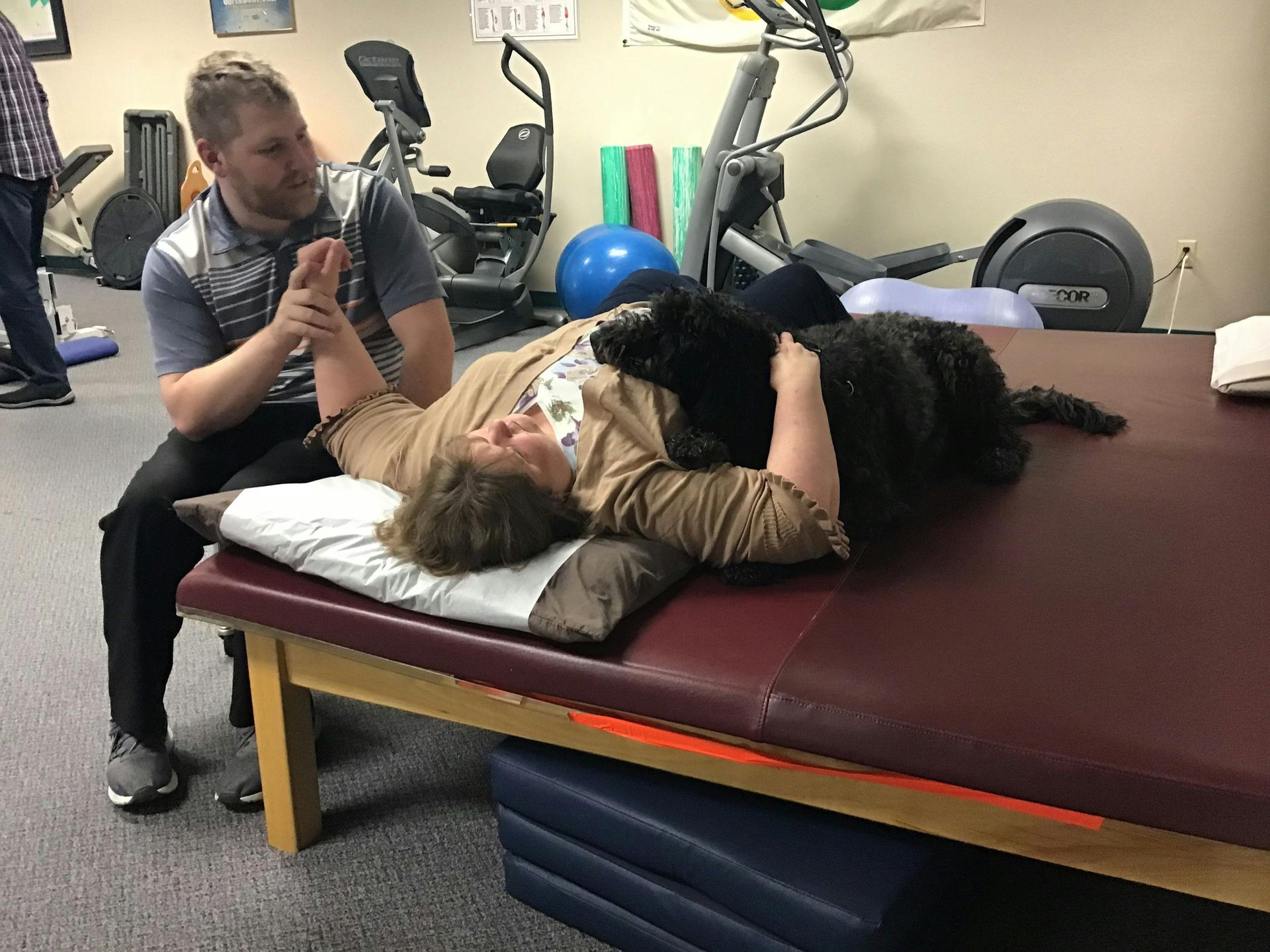
Orthopedic rehabilitation involves multiple treatment components working together to address your specific condition. The questions below clarify what happens during your care.
What happens during the initial evaluation?
The therapist performs movement tests, strength assessments, and joint mobility measurements to identify which tissues are impaired and how limitations affect your daily function. This process includes discussing your injury history, current symptoms, and specific activities you need to resume. Testing results determine your treatment plan and establish baseline measurements to track progress.
How is treatment customized to different orthopedic injuries?
Each musculoskeletal condition requires different intervention timing based on tissue healing stages. Tendon injuries respond to controlled loading programs that stimulate collagen remodeling, while ligament injuries require stability training before mobility work. Joint conditions may need manual therapy to restore capsular mobility before strengthening exercises become effective. Your plan reflects what your specific tissues need at each healing phase.
What does hands-on manual therapy accomplish?
Manual techniques address joint restrictions that limit range of motion and soft tissue tension that alters movement mechanics. Therapists use joint mobilization to restore normal arthrokinematics—the way joint surfaces glide during movement. Soft tissue work reduces muscle guarding and fascial restrictions that develop around injured areas. These techniques prepare tissues for therapeutic exercise by restoring baseline mobility.
How does Boise's outdoor activity culture affect orthopedic rehabilitation?
Many patients in Boise sustain injuries during hiking, skiing, or biking and need rehabilitation programs that prepare them for varied terrain and elevation changes. Treatment includes balance training on unstable surfaces and exercises that build endurance for sustained activity at altitude. Programs address the specific movement demands of returning to trail sports and outdoor recreation safely.
When should therapy begin after an orthopedic injury?
Starting therapy early—once acute inflammation begins resolving—prevents compensation patterns from becoming ingrained and maintains available range of motion during healing. Delaying treatment allows stiffness to develop and muscles to weaken, which extends total recovery time. The ideal window depends on injury severity, but evaluation within the first few weeks produces better long-term outcomes than waiting until symptoms plateau.
What Patients Ask Before Starting Therapy
Advance Physical Therapy develops treatment plans based on how your injury currently affects movement and what functional goals matter most for your daily life. Begin your individualized rehabilitation by arranging an initial assessment that identifies exactly which structures need intervention.